Following Reward Trails from Forecast Markets to Digital Poker Entries
Hugo Ludwig · Oct 29, 2026

Following Reward Trails from Forecast Markets to Digital Poker Entries
Operators across digital gaming platforms have developed systems that move funds from settled prediction contracts into entry pathways for zero-deposit poker events, creating visible sequences of transfers and bonus allocations that users encounter daily. Data from multiple state regulatory filings show these movements occur through shared wallet structures and promotional codes that activate after prediction market resolutions clear.
Platform Integration Patterns
Prediction market operators settle contracts on election results, weather events, and sports outcomes, then route portions of those payouts into loyalty ledgers that poker applications read automatically. Several major mobile card rooms now pull user balances from linked prediction accounts, converting settled amounts into tournament tickets without requiring additional deposits. This linkage appears most frequently in jurisdictions where single operators hold licenses for both verticals, allowing real-time balance synchronization.
Figures released by the American Gaming Association indicate that cross-vertical transfers accounted for measurable portions of freeroll participation in the second half of 2025, with volumes rising again through the first three quarters of 2026. The pattern holds steady in states that permit both prediction contracts and poker applications on the same licensed platforms.
Technical Transfer Mechanisms
Backend systems use API calls to move funds once a prediction contract resolves, tagging the transaction with a bonus identifier that the poker client recognizes as a freeroll credit. These identifiers carry expiration windows and play-through requirements that vary by state, yet the underlying movement remains consistent. Observers note that October 2026 saw several platforms introduce batch processing for these transfers, reducing the time between prediction settlement and poker ticket issuance to under four hours in most cases.
Regulatory Oversight Across Regions
State gaming boards in New Jersey and Pennsylvania require operators to log each transfer with timestamps and user identifiers, creating audit trails that link specific prediction outcomes to subsequent poker entries. Similar reporting obligations exist in Ontario under the Alcohol and Gaming Commission of Canada, where monthly summaries detail the volume of prediction-derived credits entering card room freerolls. These records show that the majority of such credits reach users who maintain active accounts on both sides of the operator's offerings.
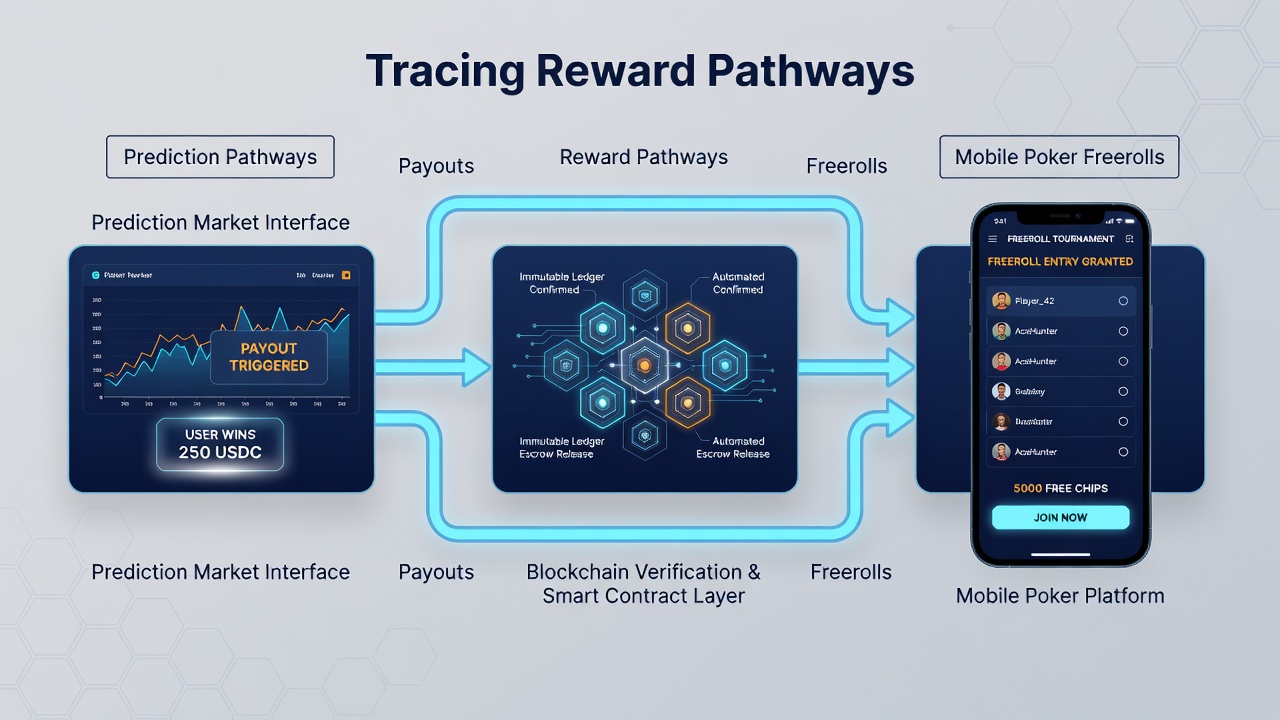
One documented case involved a prediction market user who received a $47 settlement on a weather contract, after which the amount appeared as a $47 freeroll ticket in the same operator's poker application within the same calendar day. The ticket carried a standard 1x play-through condition before any cash withdrawal became possible, matching the operator's published terms for prediction-sourced bonuses.
Player Account Flows
Users who maintain verified profiles across both products receive automated notifications once prediction payouts clear, followed by prompts to claim corresponding poker entries. These prompts include direct links that open the poker client and pre-populate the tournament registration screen with the credited amount. Industry reports from the European Gaming and Betting Association document similar notification sequences in markets where prediction contracts and poker coexist under unified licensing regimes.
Transaction logs examined by compliance teams reveal that the largest volumes of these transfers occur immediately after high-profile prediction resolutions, such as election nights or major sporting finals. The resulting spike in freeroll registrations lasts between 48 and 72 hours before returning to baseline levels.
Future Tracking Developments
Software updates scheduled for late 2026 include enhanced tagging that will allow regulators to distinguish prediction-derived credits from other bonus types in real time. These changes respond to requests from multiple gaming commissions seeking clearer separation of revenue streams. The updates will also surface aggregate statistics showing the percentage of freerolls funded through prediction pathways versus traditional marketing budgets.
Conclusion
The documented pathways demonstrate that prediction market settlements now serve as a measurable funding source for mobile poker freerolls, with technical integrations and regulatory reporting requirements shaping how those funds move between products. Records from licensing authorities in multiple jurisdictions confirm the existence and scale of these transfers while maintaining user-level traceability.